• Skip to content
  • Skip to primary sidebar
  • Skip to footer

Dancey Growth Group

  • Home
  • About
  • VICE Analysis™
  • Blog
  • Contact

Stephen Dancey

May 31, 2016 by Stephen Dancey Leave a Comment

Great Expectations

SONY DSC

The other day I told my daughter to finish eating and brush her teeth. At the same time I told my son to put his shoes on and bring the trash bin back in from the street. I was proud in how they listened so quickly, until I realized what had actually happened. After she brushed her teeth, she sat back down to finish eating. And after he ran outside to get the trash bin, he proceeded to put his shoes on.

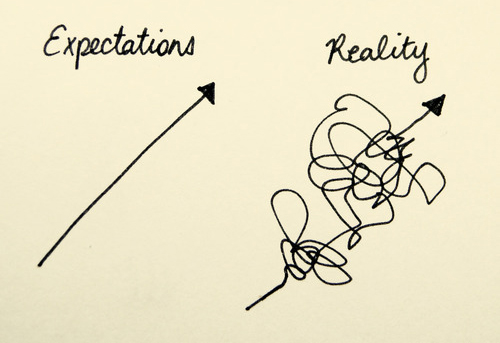
Were they wrong? No! I failed to set the right expectations for them, and they acted accordingly.

The key to success in operational initiatives is setting and managing expectations.

This flows in many directions:
1. Management to employees
2. Internal staff to external vendors
3. Internal staff to external customers
4. Department to department

Management to Employees

This is the most easily understood flow, but often the most miscommunicated. A good boss or manager will set the metrics that are important to the company and the employee, and use incentives to hold the employee accountable to monitor and act on those metrics. They will also meet periodically to check in on these metrics and troubleshoot issues. Conversely, in a good work environment, the employee will be empowered to share valued feedback with the manager.

Internal Staff to External Vendors

I’ve learned from experience that “if it is not written down, it doesn’t exist”. When you are purchasing goods or services, assume nothing. Over-communicate to the vendor (via email, purchase order, or RFP) to guarantee your needs on delivery deadlines, shipping method, lead-time, product quality, pricing, design requirements, etc. are met. If the vendor doesn’t have a confirmation process, create one. Ideally every vendor is a perfectly oiled machine, but be sure to keep your own can of oil around if they start squeaking.

Internal Staff to External Customer

This is the most crucial to the success of your business. Never take for granted any customer knowledge. At all phases – quoting, sale, delivery, post-delivery customer service – anticipating what expectations your customers have will allow you to confirm or redirect to smooth their experience. Nothing leaves a worse taste in the mouths of customers than disappointment due to unmanaged expectations.

Department to Department

Frequently overlooked, this is vital to company success. Many departments simply don’t understand what each other does, let alone why they do it. Sales will follow no rules, Finance will have too may rules. Marketing never gets back to you, and Customer Service won’t pick up the phone. Departments, in order to most productively work together, must have an understanding of the what and the why, and continue to adjust expectations back and forth as required. Making interdepartmental transparency a priority will prove valuable for the growth of your company.

In interdepartmental projects, the operational role is often project manager. Ensuring that all participants understand their specific role, the timing of deadlines, and how each portion triggers the next step in the process is crucial. And even more important is that each participant understands the reason why and how their component interacts with the next, and the importance of the finished product as significant to achieving the overarching company goal.

While no experience will perfectly match expectations, even incremental corrections can vastly improve the inner workings of any company.

Now, if I could just apply these principles to my children and their inter-sibling squabbles…

Filed Under: Mismanagement, Productivity

April 27, 2016 by Stephen Dancey Leave a Comment

Productivity Through a New Lens

Productivity Image 2

Improving personal productivity is a persistent theme of current thought leadership, ever present in blogs, podcasts, and books. (I wrote about my own personal productivity methods last year!)

And while this advice is helpful for individual growth, how many of us exist in a vacuum (that would suck!), completely independent of others for our own success? None of us do, of course. We are part of a community that relies on interpersonal skills to prove value, express understanding, and bolster the bonds that generate business.

You can be the most motivated, efficient, and streamlined individual, but if you are a demanding tyrant, all of your gains in personal productivity will be wasted.

The key is that one person’s demanding tyrant is another’s driven boss, and another’s goal-oriented win-at-all-costs manager. Every day we interact with different personality types, different learning styles, different attention spans, and different workplace settings. And our relationships fall across a wide spectrum of overlapping styles, types, and traits, making our self-awareness, perception, and empathy crucial to understanding how to work well with others.

What requires more attention is improving how we interact with clients, colleagues, bosses, employees, vendors, and partners.

Here are some ideas I keep in mind as I navigate my business interactions…

Personality Types:

Whether you’re a fan of the Myers-Briggs, Disc, True Colors, or any other personality test, the vital part is to recognize the indicators of your own personality, and equally as important is to recognize those indicators in others. Understanding how your behaviors coexist with others will offer compelling insights, allowing you to powerfully develop your network and collaborate effectively.

We depend on mutually beneficial relationships, and there is no better way to strengthen those relationships than with a true understanding of what makes people tick. Remember the last time you tried to discuss the details of a project with a creative person?

Learning Styles:

I learn by seeing and hearing a topic being discussed, but putting a book in front of me and asking me to retain the content is a futile task. I also listen to different audio content (music with no lyrics, music with lyrics, or podcasts) that demands varied attention levels to help me focus on my main task at hand. Right now I am listening to Miles Davis. (I guess growing up in a household with five siblings now forces me to employ constant noise to feel at home and comfortable!)

I know that this is not universal, however. Acknowledging how your team members (at any position on the field) learn best allows you to customize to the efficiencies and preferences, leading to better results.

Attention Spans:

I’ve been listening to the Faster Than Normal podcast recently, hosted by Peter Shankman. His first guest was Dr. Edward Hallowell, aka the ‘Father of ADHD’, author of Driven to Distraction.

He discusses using your attention span, whether diagnosed or not, as a superpower, since the flip side of ADD/ADHD is an ability to hyper-focus on a subject that has grabbed your attention.

I see this in many CEOs, as these traits often manifest in a dogged pursuit of a business goal, all the while ignoring the naysayers who might tell you said goal is unattainable. As I work with more and more people, I’ve identified the need to tailor my business to maximize the output from each person.

Workplace Settings:

Do you prefer a darkened office, or a sun-drenched open workspace? The settings that are invigorating for one person may be overstimulation for another. While I like a consistently noisy backdrop, I realize that some people work best in quiet settings, or in a coffee shop with many distractions, or outside in a park.

In addition, businesses that have established a collaborative team atmosphere, versus those that are reliant on individual performances, need employees, managers, and outside consultants to factor these when any new or modified initiative is begun. Or maybe schedule a team lunch?

The main idea in all of this is that one size does not fit all. We all act differently, think differently, work differently and thus the need to support others in getting into their ‘zone’ for maximum productivity is an important tool for success.

And if you are reading right now, thinking, is he talking about me? The answer is yes.

What did I miss? What have you experienced?

Filed Under: Employee Relations, Networking, Productivity

March 31, 2016 by Stephen Dancey 2 Comments

Grabbing Coffee? How to Jolt Your Small Business

Grabbing Coffee Image

I read this article recently at Observer called “How to Politely Turn Down People Who Want to ‘Grab Coffee Sometime.’” The author, Noah Kagan, of AppSumo, lays out his methods for avoiding in-person interactions at all costs.

My motto has always been to do what works for you in, especially in marketing and networking, and that takes many forms. To date I have tried these methods: membership in frequently meeting groups, attendance at social style events, maintaining a website, blogging, all styles of social media, and one hour get-to-know-you meetings with other professionals.

And while avoidance may work for Mr. Kagan, most people are not the Chief Sumo of a national brand. Mr. Kagan assumes a one-way relationship, in which the other party is incapable of bringing anything to the table. Although, confusingly, he uses group meetings successfully.

The world in which I live is sustained by these very types of personal meetings. For a small business owner who works with other small business owners, the connection is a key. Most importantly, I open as many doors as I can for others, without the need to expect reciprocity. I know that in turn, doors will be opened for me as well.

Remember, you never know who knows the next important contact for you! Meet people, build a network, and be a reliable resource for your connections.

While I appreciate that Mr. Kagan has found a system that works for him in efficiently managing his time, I would encourage him to open his eyes to the possibility of a positive experience.

Now, if you’ll excuse me, I need another cup.

Filed Under: Growth Ideas Tagged With: Networking

February 26, 2016 by Stephen Dancey 2 Comments

Scams, Spam, and Pork: A Week in an Email Inbox

Scams, Spam, and Pork Image

I heard someone once say “your inbox is someone else’s to-do list for you.” It is not under your control and should not be the guide to how you run your day. In an effort to manage this I decided to track my inbox distractions.

I was originally planning on this being “a month in an email inbox”, but after just one week, I had more than enough non-essential emails to analyze and see just how much time I was wasting. In an attempt to streamline my own workday and become more efficient, I’m adding these to my Daily Distraction Total (DDT-not to be confused with this or this).

In just one week I received 125 emails that I consider Scams (blatant attempts to steal my identity, money, or compromising photos), Spam (business related emails that I had no connection to), or Pork (business related emails that I did have a connection to).

  • Surprisingly, I only received 7 outright Scam emails, or 5% of my email DDT. Luckily, I did not fall for any of these, although I did make some international friends that are starting new business ventures. You can’t do much about these, so I crossed my fingers that my filters will continue to work well.
  • Likewise, I only received 16 Spam emails. These newsletters/offers may be interesting to some, but I had no idea how they got my email, and the content was not at all relevant to me. These were all a quick ‘unsubscribe’. This 12% of my DDT is now permanently gone, and I won’t think twice about it.
  • What I didn’t expect was that the vast majority (75%) of my DDT was from emails that I had control over, or Pork! I had 92 emails that were newsletters I had signed up for, social media notifications, and professional organization event notices. I went on a rampage of unsubscribing and setting my email permissions to take in this information in a usable manner. However, I did have a couple that I stayed with for relationship preservation reasons, even though I don’t consistently see value in them.
  • When it all came down to it, I had 10 emails that I wanted, anticipated, and enjoyed, a mere 8%. Good content is hard to come by!

Managing your own time is a key to remaining and improving efficiency. Reducing email distractions is just one way. What other tools do you use to keep focused?

While you think about it, I need to go take those compromising photos off the cloud.

Filed Under: Productivity Tagged With: Efficiency

January 29, 2016 by Stephen Dancey 2 Comments

Your Pancakes are Getting Cold

Your Pancakes are Getting Cold Image

The other day, my seven-year-old son was at the breakfast table. He had a plate of pancakes in front of him, and he was making a noise over, and over, and over again, as he often does. While I tried to ignore it, my ten-year-old daughter told him to stop, then poked him to stop, then yelled that he was annoying and to STOP RIGHT NOW!

Take a guess and tell me if that was effective. Of course not!

What I explained to her was that she was focusing on how she felt, and what she wanted, and that was not the best way to achieve her desired result. She needed to pay attention to him, and determine what was important to him, in order for him to subscribe to a mutually agreeable outcome.

The same mentality applies to many business interactions, among them:

  • Sales
  • Management
  • Employee Development

In Sales, the key is to discover your customer’s frustrations, and offer a reasonable solution to address them. This is often called a ‘pain point’, but can just as easily be related to the effects of success as it can struggle.

In Management, the interaction with employees is best aligned when the employee incentives mesh with the overall company goals. And the employee should be involved as much as possible in this as a collaborative process. This is the most reliable way to have buy-in, loyalty, and a concentrated team effort.

For Employee Development, it is incumbent on the employee to put themselves in the shoes of co-workers, bosses, and customers to best manage those relationships. Each one has its own pressures, and the most effective way to agree on a positive outcome is to appreciate where others are coming from.

In other words, understand the other person, and use that knowledge to adapt your viewpoint and tactics.

As for my daughter, I try to have her see the world through others’ eyes. And it is a daily struggle to deal with two younger brothers. She could have refocused her brother by saying, “Your pancakes are getting cold.” And perhaps that would have worked. Because even at seven, he knows nobody wants to eat cold pancakes.


Thanks to Recipes Hubs for the image.

Filed Under: Customer Loyalty, Employee Relations, Sales Tagged With: Customer Retention

December 29, 2015 by Stephen Dancey Leave a Comment

Wrapping Up Your Customers

Wrapping Up Your Customers Image

As the Christmas and holiday season comes to an end, and we look to the New Year, I was thinking about the parallels for how businesses interact with their customers.

My social media feed was filled with friends and family staying up to all hours of the night wrapping presents, and then being exhausted on Christmas day. This was done for the enjoyment of their children and the perpetuation of the myth (spoiler alert!) of Santa Claus. Parents go the extra mile for their most important relationships, and wouldn’t have it any other way!

In business, you similarly go the extra mile for your most important relationships, providing an experience to cultivate loyalty. And just as parents vary the experience for different aged kids, a business should tailor the engagement to customers in different stages. When a customer is new to you, it is critical to show your value, provide a timely service, and set your name apart from the competition. As customers grow, showing that you can grow with them and continue to provide a high level of service becomes paramount. After all, it is much more costly to find a new customer than to retain an existing one.

The alternative is one-and-done customers, with no brand loyalty. This results in a constant advertising and lead generation phase and a race to the bottom of discounts and gimmicks.

Do right by your customers, and they’ll do right by you. Here’s to a great 2016!


Photo courtesy of the Huffington Post.

Filed Under: Customer Loyalty, Growth Ideas Tagged With: Customer Retention, New Year

  • « Previous Page
  • Page 1
  • Page 2
  • Page 3
  • Next Page »

Primary Sidebar

Search

Find us on the Web

Find us on Linkedin

Find us on Twitter

Find us on Facebook

Recent Posts

  • Work, Wisdom, or Wealth
  • Over or Follows: How do Form & Function shape your choices?
  • Respectfully, please stop yapping
  • The Top 10 Ways to Annoy Your LinkedIn Network with AI (and What to Do Instead)
  • Write and Wrong

Footer

Dancey Growth Group

A fresh look at your business can be an eye-opening experience. We provide a new perspective that helps fine tune your day to day processes to grow your company. Our detailed approach ensures company-wide alignment with your growth goals. Contact us to find out more.

Menu

  • Home
  • About
  • VICE Analysis™
  • Blog
  • Partners
  • Other Services
  • Testimonials
  • Contact

Tags

Biometrics Bosstones Customer Retention Efficiency Market Basket NBA Networking New Year Vacation

Search

Tweets by @stephendancey

Copyright © 2025 · Executive Pro on Genesis Framework · WordPress · Log in